
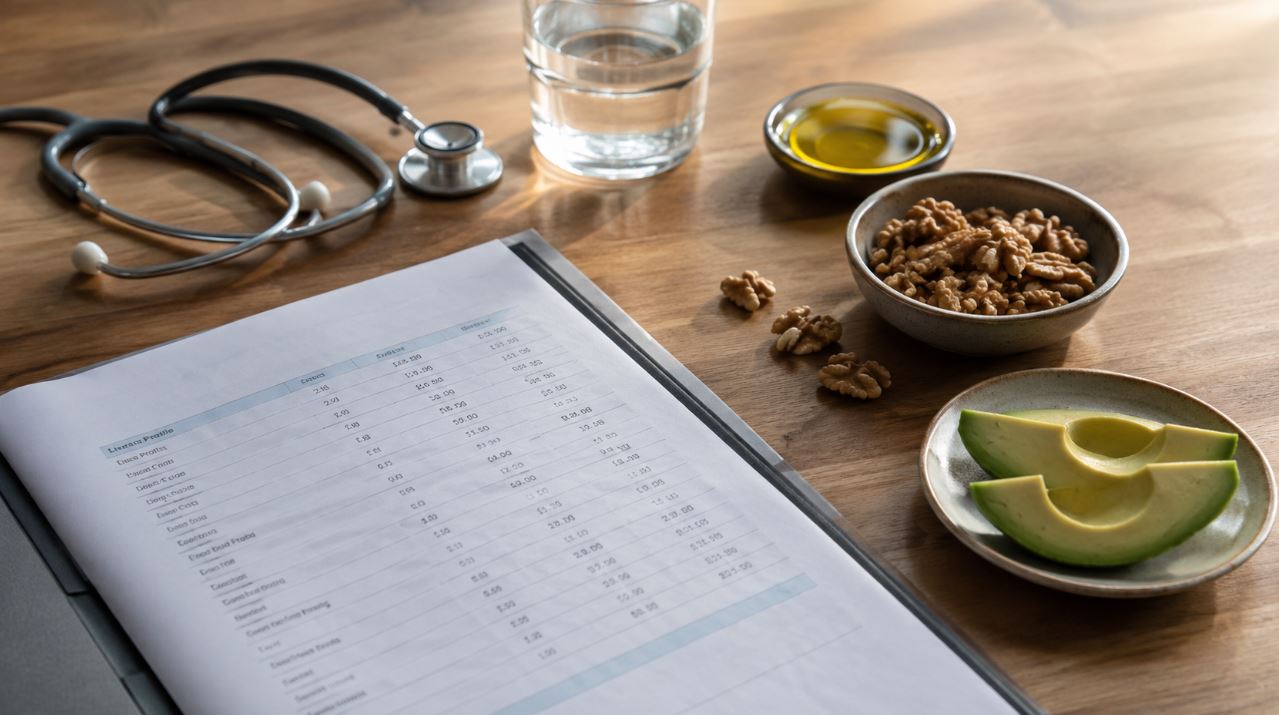
NAFLD (fatty liver): the silent Indian epidemic and how to actually reverse it
Around 38% of urban Indian adults have non-alcoholic fatty liver, most without knowing. The lab marker that catches it 5 years early, why low-fat advice is backwards, and the lifestyle protocol that genuinely reverses it.
Editorially reviewed
Bassam Mallick · Last reviewed 25 May 2026
Master Nutrition Coach · MSc Kinesiology, Sports & Performance Nutrition · Lifestyle & Metabolic Medicine, Harvard Medical School
The ultrasound report I see most often in my client intake forms isn't for a knee injury or a back issue. It's a routine abdominal scan, ordered for something unrelated — a kidney stone scare, a gallbladder check, a pre-employment medical — and tucked into the radiologist's notes is a single phrase: Grade I fatty liver. Suggested clinical correlation.
Most clients have never heard of non-alcoholic fatty liver disease until that moment. The doctor has shrugged and said "lose some weight," and the report goes into a drawer.
It shouldn't. Indian research suggests close to one in three urban adults — in some surveys, closer to 38% — are walking around with fatty liver, the vast majority undiagnosed. It is quietly setting up a generation for problems that take fifteen years to surface.
The good news: in its early stages, NAFLD is one of the most genuinely reversible chronic conditions there is. Most of my clients see lab markers correct within two months of doing the work properly. Treat what follows as education, not medical advice — a diagnosis is a doctor's job. What I can help with is the lifestyle protocol that runs alongside whatever your physician recommends.
What NAFLD actually is, in plain language
Non-alcoholic fatty liver disease — NAFLD — is fat accumulating inside liver cells, in someone who is not drinking alcohol heavily. Your liver should be roughly 5% fat by weight. Above that, without alcohol as the cause, you have NAFLD.
It progresses through stages, slowly, often over a decade or more:
| Stage | What's happening | Reversibility |
|---|---|---|
| 1. Simple steatosis | Fat in the liver, no inflammation | Largely reversible — where most people sit |
| 2. NASH | Fat now causing inflammation; enzymes climb | Still reversible; narrower window |
| 3. Fibrosis | Inflammation laying down scar tissue | Reversible slowly, with medical supervision |
| 4. Cirrhosis | Extensive, permanent scarring | The stage we aim never to reach |
- Simple steatosis — fat in the liver, but no inflammation. Where most people sit. Largely silent, largely reversible.
- NASH (non-alcoholic steatohepatitis) — the fat has started to cause inflammation. Liver enzymes climb. Still reversible, but the window is narrower.
- Fibrosis — chronic inflammation has started laying down scar tissue. Reversible slowly, with sustained lifestyle change plus medical supervision.
- Cirrhosis — scarring is now extensive and the liver's structure is permanently changed. The stage we are trying to never reach.
If you've been told you have grade 1 or grade 2 fatty liver and your enzymes are only mildly raised, you are early. Most people in my practice in this stage fully reverse it within six to twelve months of doing the right things consistently.
Why Indians specifically are at unusually high risk
NAFLD does not affect every population equally. Indians sit near the top of the global risk table — often at lower body weights than other populations.
The pattern researchers describe is the Asian Indian phenotype: more metabolic disease at the same BMI, more visceral fat packed around internal organs (including the liver), more insulin resistance, and a stubbornly higher rate of "thin outside, fat inside" cases. The Indian "lean NAFLD" phenotype is real and easy to miss precisely because the people who have it don't look the part.
Layer on top:
- A traditional diet that has drifted — more white rice, more maida-based snacks, more fried food, more sugary tea, more mithai, more packaged biscuits. Each is fine in moderation; layered together, they create the environment fatty liver thrives in.
- A sedentary working population — long commutes, desk jobs, very little walking built into the day, very little structured strength training.
- Widespread vitamin D deficiency — most urban Indians I work with test deficient, and low vitamin D worsens insulin sensitivity, the engine that drives NAFLD.
- Genetic variants — the PNPLA3 variant that increases liver-fat susceptibility is more common in South Asians than in many other groups.
None of this is destiny. It means your risk floor is higher, so the lifestyle inputs matter more, earlier, and more consistently.
The lab marker that catches it five years early
Here is the single most useful idea in this whole article: ALT — alanine aminotransferase, labelled SGPT on most Indian lab reports — is often elevated for years before an ultrasound picks up visible fatty liver.
ALT is an enzyme that lives inside liver cells. When liver cells are inflamed or damaged, they leak ALT into the bloodstream. A rising ALT, especially when AST stays normal-ish, is one of the earliest signals of metabolic liver stress.
The trap is the reference range. Most Indian labs report ALT as "normal" up to around 40 to 50 U/L, using cutoffs developed decades ago in Western populations. Newer South-Asia-specific data suggest the real upper limit of healthy ALT is closer to 25 U/L for women and 30 U/L for men. Above that, even if your report says "within normal limits," your liver may already be asking for help.
If you want to investigate properly, ask your doctor about:
- ALT (SGPT) and AST (SGOT) — the basic liver enzymes
- GGT — rises with metabolic and alcohol-related stress
- Fasting insulin plus fasting glucose — to calculate HOMA-IR, the insulin-resistance number that drives NAFLD
- HbA1c — three-month average blood sugar
- Triglycerides and HDL — the lipid pair that tracks closely with liver fat
- Vitamin D — deficiency worsens the underlying picture
- Ultrasound abdomen — the standard imaging confirmation
A FibroScan can quantify liver stiffness more precisely if your doctor thinks the case warrants it. This is the conversation to bring to your next check-up, not something to self-order in a panic.
Symptoms — usually none, until very late
Early-stage NAFLD almost never announces itself. The most common symptom report I hear is a vague, dull discomfort under the right ribs after a heavy meal; tiredness that doesn't quite explain itself; mild brain fog occasionally. That's it. Most people feel completely fine.
By the time symptoms get loud — yellowing of the eyes, dark urine, persistent itching, severe abdominal pain — the disease has usually progressed to stages we want to never visit. We will come back to those red-flag symptoms near the end.
The lesson: don't wait to feel something. Use the lab numbers and the ultrasound as your early-warning system.
Why standard "low-fat" advice is backwards
For thirty years, the public-health story has been eat less fat. People with fatty liver are often told by well-meaning relatives and old-school dietitians to cut oil, cut ghee, cut nuts, and stick to white rice and roti because they are "lighter."
The data has caught up, and it is unambiguous. The biggest single driver of fat accumulating inside liver cells is not the fat on your plate. It is excess refined carbohydrate and added fructose, which your liver converts directly into liver fat through a pathway called de novo lipogenesis — a mechanism now well established in the hepatology literature (Jensen et al., Journal of Hepatology, 2018).
When you eat a meal of white rice plus sugary fruit juice plus a sweet dessert, the blood sugar and insulin spike floods the liver with substrate it has no choice but to turn into fat. Do this three meals a day, for twenty years, and the predictable outcome is fatty liver.
By contrast, the dietary fats people are scared of — extra-virgin olive oil, ghee in moderate amounts, nuts, fatty fish, paneer, eggs — are largely protective. They blunt blood-sugar spikes, keep meals satisfying, and carry anti-inflammatory compounds that help liver tissue.
The fat on your plate isn't filling your liver — the sugar and white rice are. Your liver turns excess refined carbohydrate and fructose straight into liver fat. Olive oil, nuts and fish are, if anything, protective.
Hold this frame: dietary fat is not the problem; refined starch and added sugar are. Once you accept that, the rest of the protocol falls into place.
The dietary protocol that genuinely reverses NAFLD
Here is what I run with clients who come in with diagnosed fatty liver and have their doctor's approval to make lifestyle changes. It is unglamorous and it works.
A modest, sustained calorie deficit if you are overweight. In a landmark study, losing 7 to 10% of body weight through lifestyle change resolved the disease — including inflammation (NASH) — in the majority of patients, with the benefit scaling directly with the amount of weight lost (Vilar-Gomez et al., Gastroenterology, 2015). For an 80 kg adult, that's a six to eight kilo loss — not dramatic, but transformative for the liver. The structured system I use with paying clients is in The 12-Week Fat Loss Manual.
Cut added sugar aggressively, especially in liquid form. Sugary chai, sweetened coffee, packaged fruit juice, soft drinks, energy drinks. Liquid sugar is the worst fructose load for the liver because it arrives fast and undiluted by fibre. This single change moves liver enzymes more than almost any other intervention.
Reduce refined flour and white rice. Not banning — reducing. Millets (ragi, jowar, bajra) before brown rice, brown rice before white rice, hand-ground atta before maida. Roti with extra fibre is gentler on your liver than maida-based parathas and biscuits.
Protein at every meal. Dal, paneer, eggs, fish, chicken, tofu, Greek yoghurt, sprouts. Protein blunts blood-sugar spikes, preserves muscle as you lose weight, and is the most satiating macronutrient. Most Indian vegetarian plates are protein-light and carb-heavy — fixing that ratio alone moves the needle.
Generous vegetables, especially leafy and cruciferous. Palak, methi, sarson, broccoli, cauliflower, cabbage. Volume, fibre, and compounds your liver uses for its own biochemical detoxification pathways.
Healthy fats, on purpose. Extra-virgin olive oil on vegetables and salads. A handful of walnuts or almonds daily. Oily fish two to three times a week — or an omega-3 supplement if you don't eat fish.
Coffee. A meta-analysis found that two to three cups of real coffee daily is associated with a lower risk of NAFLD and less advanced fibrosis in those who already have it (Wijarnpreecha et al., Eur J Gastroenterol Hepatol, 2017). Real coffee, not the heavily sweetened bottled stuff. Black, or with a splash of milk and minimal sugar.
Whole fruit, in moderation. Fruit juice, almost never. A whole apple comes with fibre that slows fructose absorption. A glass of apple juice is a fructose bomb without the brakes.
For the food side, high-protein Indian meal templates that fit this profile are in The Indian Macro Cookbook, and the broader anti-inflammatory framework — which substantially overlaps with the NAFLD-reversal protocol — is in The Anti-Inflammatory Reset.
Training — the most powerful single intervention
If I had to pick one non-dietary lever for someone with fatty liver, it would be resistance training, three times a week.
The research here is striking. A controlled trial showed that structured resistance training reduces liver fat content even without weight loss (Hallsworth et al., Gut, 2011). The mechanism appears to be improved insulin sensitivity in muscle tissue — when your muscles soak up blood glucose efficiently, your liver stops being overwhelmed by the post-meal load and stops converting the excess into liver fat.
Three sessions a week, compound lifts at the centre — squats, hinges, pushes, pulls — progressing weight or reps slowly over months. This is the structure I lay out in The Strong Woman's First Program. For those whose insulin-resistance picture is more complicated — and PCOS very often shows up alongside NAFLD in Indian women — The PCOS & Insulin-Resistance Plan goes deeper.
Cardio helps too, but resistance comes first. Walking belongs as the daily base layer — especially post-meal walks, which directly reduce the blood-sugar spikes that drive liver-fat deposition. My piece on walking for fat loss covers that mechanism in detail.
Lift three times a week. Walk daily, with at least one walk after your largest meal. Track your steps with the free Steps-to-Deficit calculator.
What about supplements?
Let me be honest about what the evidence actually shows.
- Coffee — the most evidence-supported intervention people never expect. Two to three cups a day, real coffee, unsweetened.
- Vitamin E (around 800 IU per day) — strongest evidence base, but only for confirmed NASH and only under doctor supervision. Not appropriate for diabetics.
- Vitamin D — correct deficiency. Most urban Indians are. Helps insulin sensitivity rather than the liver directly.
- Omega-3 (EPA + DHA) — modest but real benefit on liver fat content. One to two grams of combined EPA + DHA daily if your diet is fish-light.
- Milk thistle / silymarin — popular, widely sold, weak evidence. Not a substitute for any of the lifestyle changes above.
- "Liver detox" supplements — be sceptical. The liver is the organ that does detoxification. The idea that you need to detox the detoxifier with a powdered supplement is marketing, not medicine.
Talk to your doctor before adding any supplement to a fatty-liver protocol, especially if you are on medication.
Alcohol — the conversation nobody wants to have
NAFLD is, by definition, non-alcoholic. That does not mean alcohol is safe here. Even small amounts of alcohol on top of a fatty liver are extra metabolic work the liver doesn't need, and there is good evidence alcohol accelerates progression in people who already have NAFLD.
My recommendation during an active reversal phase: cut alcohol completely for the first three to six months. If you choose to reintroduce it after labs and imaging improve, keep it light and occasional.
When to see a doctor immediately
Most fatty liver is silent. Some symptoms are not. See a doctor urgently — not a blog post — if you experience:
- Yellowing of the eyes or skin (jaundice)
- Dark, tea-coloured urine alongside pale stools
- Severe pain on the right side of the abdomen
- Persistent, unexplained itching of the skin
- Persistent vomiting or unusual bruising
- A swollen abdomen that has appeared over weeks
These can be signs of advanced liver disease and need urgent assessment.
The realistic timeline
When my clients do this properly, here is what I usually see:
- Weeks 4 to 8 — ALT and other liver enzymes start dropping, often substantially. Energy improves. The vague right-side discomfort fades.
- Months 3 to 6 — Repeat ultrasound usually shows reduced grade of fatty liver. Insulin sensitivity markedly improved. Triglycerides down, HDL up.
- Months 6 to 12 — For mild-to-moderate NAFLD, full imaging reversal is common in clients who stuck to the protocol. Lab markers normalised. Work shifts from reversal to prevention of recurrence.
- Beyond 12 months — If fibrosis was present, slower reversal continues. Same protocol, more patience, tighter medical follow-up.
Six months of consistent, unsexy work for a reversed diagnosis is one of the best returns on lifestyle investment that exists in adult health.
The bottom line
Fatty liver is common, mostly silent, and mostly reversible if you catch it early. The Indian risk profile is higher than the global average; the standard "cut fat, eat lighter" advice is largely wrong; the actual protocol is unromantic and effective.
If you take one thing from this piece: ALT above 25 in a woman or 30 in a man — even when the lab says "normal" — is a conversation to have with your doctor. Don't wait to feel something. Use the numbers.
What to do next
- The full anti-inflammatory and metabolic-recovery protocol I run with clients is in The Anti-Inflammatory Reset. You can read Chapter 1 free before deciding.
- If you also need to lose weight as part of the picture, The 12-Week Fat Loss Manual is the structured system.
- For the food side, The Indian Macro Cookbook gives you the high-protein, lower-refined-carb plate.
- If insulin resistance is part of your picture — and it almost always is, with NAFLD — The PCOS & Insulin-Resistance Plan goes deep on that mechanism.
- Track your daily movement with the free Steps-to-Deficit calculator.
Liver health doesn't get much attention until something goes wrong. You have the chance to give it the attention it deserves now, while it is still quiet, still early, and still within your control.
Frequently asked questions
Can fatty liver be reversed, and how long does it take?
Early-stage fatty liver (simple fat, or even early inflammation/NASH) is one of the most reversible chronic conditions there is. The main driver is losing 7–10% of your body weight through diet and exercise — in a landmark study that resolved the disease in most patients, and the more weight lost, the greater the benefit. Timeline in practice: liver enzymes often drop within 4–8 weeks, ultrasound grade improves by 3–6 months, and full imaging reversal is common by 6–12 months for mild-to-moderate cases. Fibrosis reverses more slowly and needs closer medical follow-up.
What foods should I avoid with fatty liver — and is fat the problem?
Fat is not the main problem, despite the old advice — refined carbohydrate and added sugar are, because the liver converts them (especially fructose) directly into liver fat. So the priorities are: cut liquid sugar hard (sugary chai, packaged juice, soft drinks), reduce white rice and maida, and drink whole fruit rather than juice. Meanwhile the fats people fear — olive oil, nuts, oily fish, ghee in moderation, eggs, paneer — are largely protective because they blunt blood-sugar spikes. Eat protein and vegetables at every meal; keep alcohol out during an active reversal phase.
What is the best exercise to reduce liver fat?
Resistance training three times a week is the single most powerful non-diet lever — controlled trials show it reduces liver fat even without any weight loss, by improving insulin sensitivity in muscle so your liver stops being flooded with post-meal glucose. Build sessions around compound lifts (squats, hinges, pushes, pulls). Add daily walking as the base layer, especially a walk after your largest meal, which directly blunts the blood-sugar spikes that deposit liver fat. Cardio helps, but resistance training comes first.
Does coffee help fatty liver?
Surprisingly, yes — it's one of the best-evidenced and least-expected interventions. A meta-analysis found that two to three cups of real coffee a day is associated with a lower risk of NAFLD and, in people who already have it, less progression to advanced fibrosis. The key is real, unsweetened coffee — black or with a splash of milk and minimal sugar — not the heavily sweetened bottled or café versions, whose sugar load would work against you.
Can you have fatty liver without being overweight?
Yes — 'lean NAFLD' is real and common in Indians. The Asian Indian phenotype means more visceral fat around the organs (including the liver), more insulin resistance, and more metabolic disease at any given BMI, plus a genetic variant (PNPLA3) that raises liver-fat susceptibility. So you can look slim, have a normal BMI, and still have a fatty liver. That's why the labs matter more than the scale: ask about ALT (SGPT) — above about 25 in women or 30 in men, even when the report says 'normal', is worth a conversation with your doctor.
References
- [1]
Vilar-Gomez E, Martinez-Perez Y, Calzadilla-Bertot L, et al. (2015). Weight loss through lifestyle modification significantly reduces features of nonalcoholic steatohepatitis. Gastroenterology, 149(2):367-378.
View source - [2]
Hallsworth K, Fattakhova G, Hollingsworth KG, et al. (2011). Resistance exercise reduces liver fat and its mediators in non-alcoholic fatty liver disease independent of weight loss. Gut, 60(9):1278-1283.
View source - [3]
Jensen T, Abdelmalek MF, Sullivan S, et al. (2018). Fructose and sugar: a major mediator of non-alcoholic fatty liver disease. Journal of Hepatology, 68(5):1063-1075.
View source - [4]
Wijarnpreecha K, Thongprayoon C, Ungprasert P (2017). Coffee consumption and risk of nonalcoholic fatty liver disease: a systematic review and meta-analysis. European Journal of Gastroenterology & Hepatology, 29(2):e8-e12.
View source